




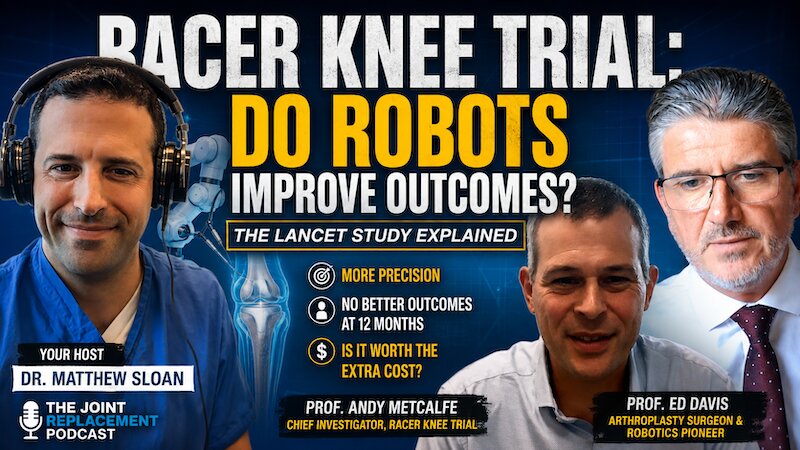
#41 – RACER Knee: Does Robotic Knee Replacement Actually Improve Outcomes? Andy Metcalfe & Ed Davis
Robotic-assisted total knee replacement has become one of the most important technological developments in modern joint replacement. Advocates point to greater surgical precision, reproducibility, intraoperative data, and the ability to individualize implant positioning. Critics have continued to ask a simpler question: Do patients actually do better? The newly published RACER-Knee …
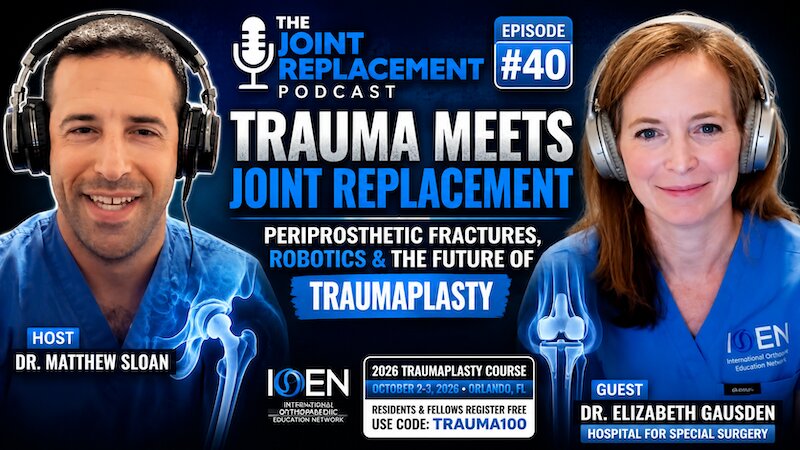
#40 – What is Traumaplasty? Elizabeth Gausden, MD
Periprosthetic fractures are among the most challenging complications facing modern joint replacement surgeons. As more patients receive hip and knee replacements and remain active with them for longer, surgeons increasingly encounter fractures around existing implants that require expertise in both fracture fixation and revision arthroplasty. Contemporary management can range from …
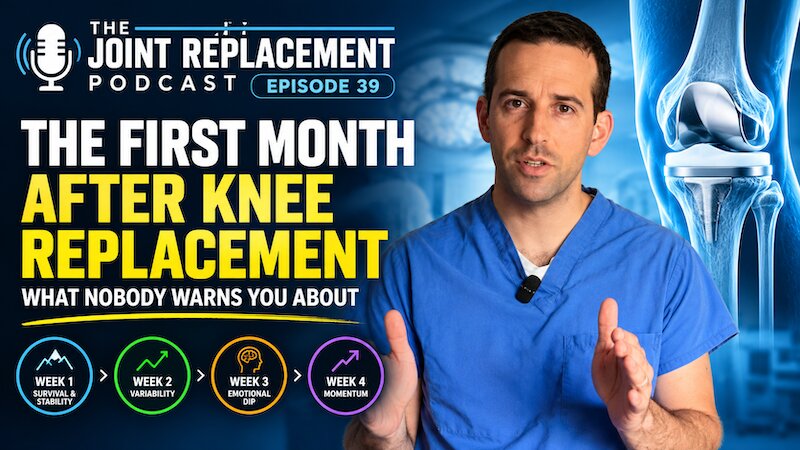
#39 – What Happens in the First Month After Knee Replacement?
The surgery is over. You stood up. You walked. You made it home. And then reality sets in. For many patients, the hardest part of knee replacement isn’t the operation itself—it’s navigating the first several weeks after surgery. Once the anesthesia wears off and the structure of the hospital disappears, …

#38 – What is Full Spectrum Hip & Knee Surgery? Atul Kamath, MD
Modern orthopedic care is no longer simply about deciding whether a patient does—or does not—need a joint replacement. Today, surgeons have an expanding spectrum of options that can include hip arthroscopy, osteotomy, cartilage restoration, partial knee replacement, total joint replacement, robotic technology, and increasingly sophisticated outpatient recovery pathways. In Episode …
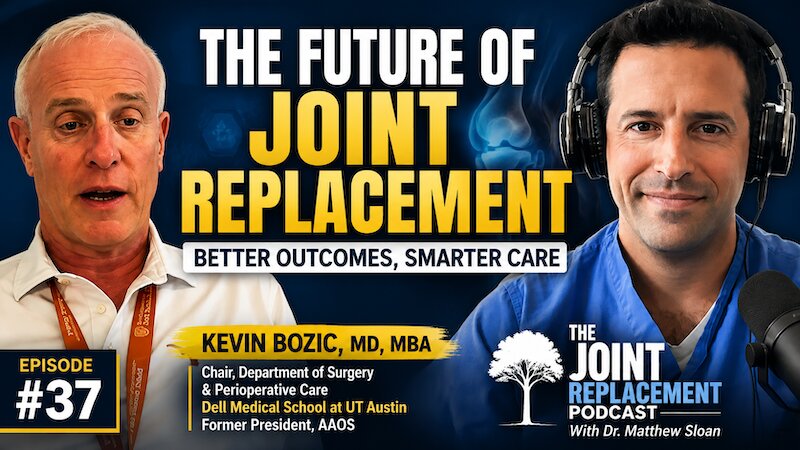
#37 – What’s Wrong with Fee-For-Service? Kevin Bozic, MD, MBA
What if the future of joint replacement is not simply about performing a better operation, but about building a better healthcare system around the patient? In Episode #37 of The Joint Replacement Podcast, I sit down with Kevin Bozic, MD, MBA, an orthopedic surgeon specializing in hip and knee replacement, …
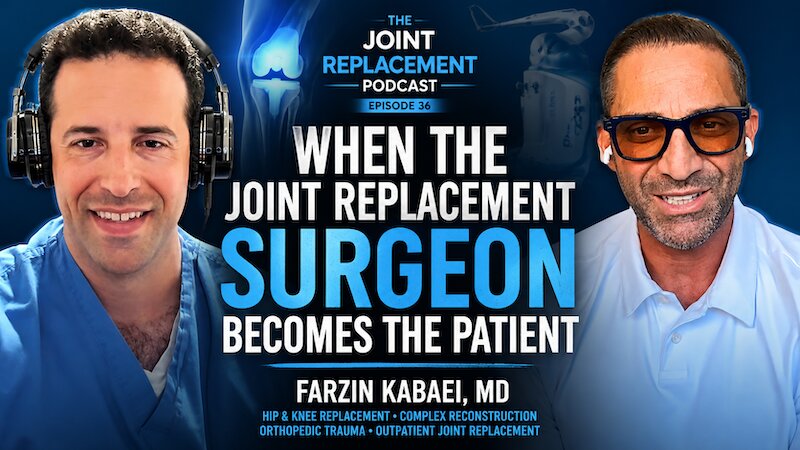
#36 – What Happens When the Surgeon Becomes the Patient? Farzin Kabaei, MD
What does a joint replacement surgeon learn when he becomes a joint replacement patient himself? In Episode 36 of The Joint Replacement Podcast, I sit down with Farzin Kabaei, MD, a board-certified orthopedic surgeon in Los Angeles specializing in hip and knee replacement, complex joint reconstruction, and orthopedic trauma. Dr. …
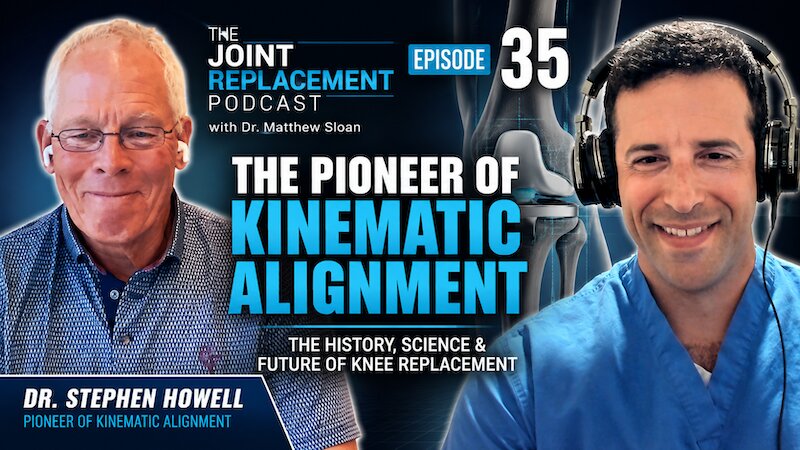
#35 – Is Kinematic Alignment Better? Stephen Howell, MD
Modern total knee replacement has undergone remarkable advances over the past several decades, but few concepts have generated as much discussion—and as much research—as kinematic alignment (KA). In Episode #35 of The Joint Replacement Podcast, I had the privilege of sitting down with Dr. Stephen Howell, one of the pioneers …
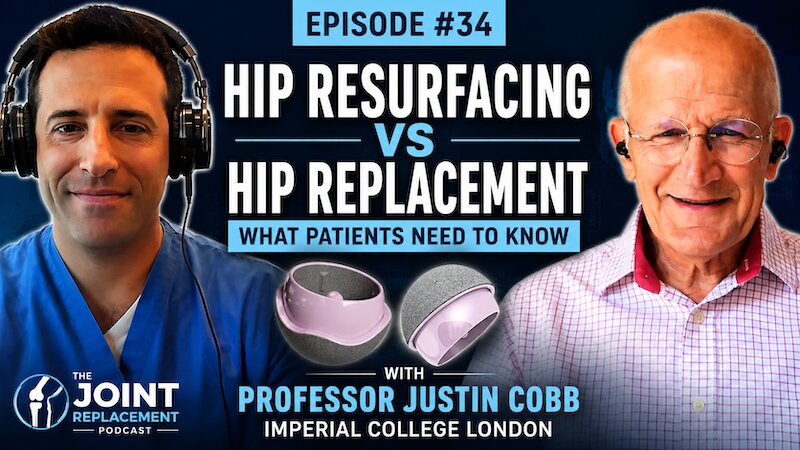
#34 – Is it Time for the Return of Hip Resurfacing? Prof. Justin Cobb
New Podcast Episode #34 Featuring Professor Justin Cobb (Imperial College London) For decades, hip replacement has been considered one of the most successful operations in all of medicine. Modern implants routinely provide decades of pain relief, excellent function, and predictable outcomes for millions of patients worldwide. But for younger, highly …
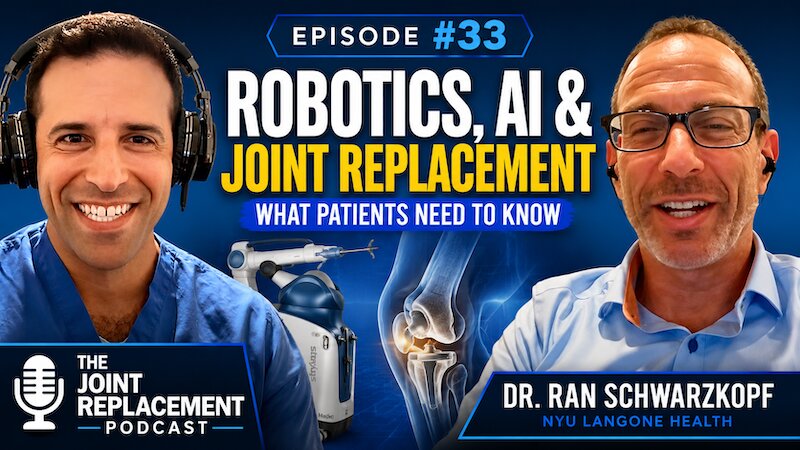
#33 – When is it Time for Joint Replacement? Ran Schwarzkopf, MD
The Joint Replacement Podcast – Episode #33 Modern hip and knee replacement has changed dramatically over the last two decades. Today’s implants last longer, surgeries are more precise, recoveries are faster, and technology continues to evolve at an incredible pace. But with so much information available online, patients often wonder: …
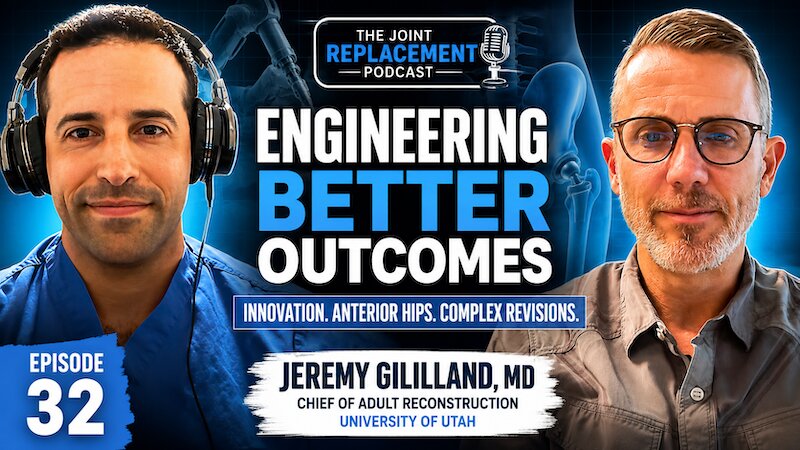
#32 – Can We Engineer the Future of Joint Replacement? Jeremy Gililland, MD
The newest episode of The Joint Replacement Podcast features an engaging discussion with Dr. Jeremy Gililland, Professor of Orthopaedic Surgery and Chief of Adult Reconstruction at the University of Utah. Before becoming one of the country’s leading hip and knee replacement surgeons, Dr. Gililland trained as a mechanical engineer—a background …